Wednesday, November 23, 2011

Monday, November 14, 2011
Understanding Photosynthesis with Max Axiom

Click here to review Understanding Photosynthesis with Max Axiom.
Did you enjoy this story. Was it helpful?
Thursday, November 10, 2011
Photosynthesis
Click here to view the plant slideshow from class.
Click here to view a helpful animation about photosynthesis.
Still confused about photosynthesis? Click here to read a detailed description about photosynthesis.
Monday, October 31, 2011
Passive and Active Transport

Do you want to know more about passive transport? Active transport?
Click on the pink words above to view an animation about each topic.
What is a concentration gradient? A solute? How do they effect the rate of passive transport? Please respond:)
Saturday, October 22, 2011
Cell Membrane

Click here to read more about the cell membrane. Be sure to read the information about passive and active transport as this will be discussed in class this week. Also, feel free to check out the cell structure and function tabs to review the information we have been covering in class.
Do you want to learn more about the different types of protein channels that make up the cell membrane? Click here to view an animation on this subject. Did you take the quiz at the end of the animation? How did you do?
Friday, October 21, 2011
Lysosomes
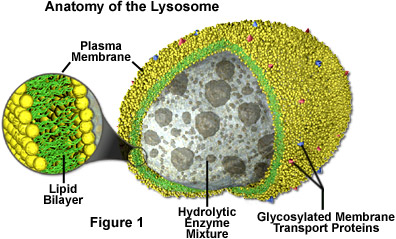
Do you want to read a NY Times article about lysosomes? Click here to read about their destructive behavior.
What did you find most interesting about lysosomes?
Thursday, October 20, 2011
Cell Models
 Click here to view a model of a plant an animal cell.
Do you want to learn more about the difference between prokaryote and eukaryotes? Click here for more details.
Saturday, October 8, 2011
Organic Compound Videos
Click on the links below to view videos about each group of organic compound:
- Carbohydrates
- Lipids
- Proteins
- DNA
- RNA
- Carbohydrates
- Lipids
- Proteins
- DNA
- RNA
Organic Compound Animations
Do you want to learn more about organic compounds? Click here for more information (scroll to the bottom for biology related facts).
Do you want to view animations about each of the organic compounds? Click on the list below:
- Carbohydrates
- Lipids
- Proteins
- Enzymes (also called biological catalysts)
Were the animations helpful? Explain.
Do you want to view animations about each of the organic compounds? Click on the list below:
- Carbohydrates
- Lipids
- Proteins
- Enzymes (also called biological catalysts)
Were the animations helpful? Explain.
Thursday, October 6, 2011
How does the American black bear maintain homeostasis during the winter?
 Certain mammals have what many people might consider the good fortune to be able to sleep through the winter—to hibernate. They bed down in the fall and, for all intents and purposes, don't arise again until the spring. Raccoons and skunks do it. So do woodchucks and chipmunks, hamsters and hedgehogs, bats and bears. Some, particularly rodents, sleep very deeply, while others, such as bears, slumber more lightly.
One of the most celebrated hibernators is the American black bear (Ursus americanus). It can go for as long as 100 days without eating, drinking, urinating, defecating, or exercising.
Preparations for over-wintering begin in the summer, when bears begin gorging carbohydrate-rich berries and other foods to put on weight. During this period, they can gain as much as 30 pounds per week. In early autumn, a bear (and its cubs, if any) will rake leaves, twigs, and other plant materials into the den to form a nest. Throughout the fall its activity level steadily drops until it ends completely when the bear enters its den.
Bears make dens in burrows, caves, hollowed-out trees, and rock crevices. Dens of the bears Rogers studies in Minnesota typically feature entrances just large enough for a bear to squeeze through; interior chambers measure two-and-a-half to five feet wide and two to three feet high.
It's cramped for a single bear, much less for a mother and her cubs. But that's the way bears like it: Black bears do no exercising of any sort during the winter months, preferring to lie rolled into a tight ball, with their heads between their forepaws and their heavily furred backs exposed to the worst of the cold. Dens themselves offer little insulation. In Minnesota, dens with open entrances are about as warm inside as outside, where the temperature, Rogers says, often plummets to as low as -28°F. Bears keep warm using their great bulk, their inches-deep layer of fat, and their fur, which more than doubles its insulative value during the fall.
Why is it important that the American black bear over eat carbohydrate rich foods before hibernating in the winter?How do bears utilize their fat stores during the winter?
Can you find an example of homeostasis in this article?
Explain.
Tuesday, September 20, 2011
Autotrophs, Heterotrophs, Decomposers, and CHEMOTROPHS?

Did you ever wonder how organisms that live on the ocean floor get energy if they are so far away from sun? Well, there is a group of organisms, like the tubeworm, that carry out chemosynthesis. Click here to find out more.
Monday, September 19, 2011
Scientific Method

Do you want to review the information that we have learned about the scientific method?
Click here for an animation about two classic experiments that review the use of the scientific method.
Or, click here to view a second animation from BrainPOP. This is a cartoon featuring Tim and Moby who use the scientific method to help them figure out why their fig plant has brown leaves.
Did you view the animations? Did they help increase your understanding of the scientific method and variables?
Brain Pop login:
Brain Pop login:
Login: neistm
Password: neistm
Before 5:30pm during the week and all day on the weekends.
Online Textbook

Do you want to access the Living Environment textbook online? Click here to register. All you need is the class access code written below.
Access codes:
7A: 87C10D1F2E422C902100
7B: 4884C1697F0D60680452
7C: C29F44F3836C622EEF7C
7D:8478E01B0CC98283DFB2
Welcome 7th Graders!

Welcome to Nest Bio Blog. This is a fun and educational way for you to access online resources and current events about the Living Environment curriculum. I hope you enjoy reading and commenting on this blog throughout the 2010-2011 school year.
Saturday, January 1, 2011
Cell Membrane
Click here to read more about the cell membrane. Be sure to read the information about passive and active transport as this will be discussed in class this week. Also, feel free to check out the cell structure and function tabs to review the information we have been covering in class.
Do you want to learn more about the different types of protein channels that make up the cell membrane?
Click here to view an animation on this subject. Did you take the quiz at the end of the animation? How well did you do?
Subscribe to:
Comments (Atom)